

Disclosure: This article on Etsy product research contains independent recommendations based on real-world experience and research. To support our work, we include partner links. If you make a purchase through these links, we may earn a commission at no extra cost to you.
In 2026, almost all products on Etsy are saturated; therefore, if you start selling on Etsy without product research, it often leads to bad product choices and disappointments. Based on my personal observations of new shops while selling on Etsy, there are two main mistakes beginner shops often make, which I discuss below. Plus, there is also a third mistake that even experienced sellers can make, which is discussed later in this article.
Mistake #1
Seeing popular products on the first page and starting to sell similar ones
In a scenario like this, the chances are you are now chasing a product facing heavy competition. In 2026, you cannot win with generic products. Big sellers dominate generic keywords—you can’t. You’ll need to find specific products with low competition and sufficient search volume to get sales. You find these products based on shoppers’ specific long search phrases.
- Japanese Wall Art ❌ —> Heavy Competition —> Difficult Sales
- Japanese Bathroom Frog Print ✅ —> Less Competition —> Easy Sales
Mistake #2
Making random designs and thinking sales will automatically pour in
In a scenario like this, you are making a product that nobody is searching for. No buyer searches means no sales.
We will discuss an additional research mistake #3 later in this article.
The Non-Negotiable Product Research Process
1. Use Etsy’s Popular Categories as Starting Points
If you are starting from scratch and looking for product ideas, you should first identify popular Etsy product categories to explore further.
Popular Physical Product Categories:
- Jewelry
- Signage
- Signage
- Home Decor
- Boxes
- Drinkware
- Bags
- Apparel
- Cases and Covers
- Decorative Accessories
You can learn about popular products in these categories in the article Physical Products Guide for Aspiring Etsy Sellers: Ideas, Design, Production, and Sales Strategies.
Popular Digital Product Categories:
- Social Media Templates
- Wedding, Ceremony, and Party Templates
- Business Templates
- Website Templates
- Video Templates
- Digital and Printable Journals and Planners
- Graphic Design Resources
- Printable Games
- Digital Mockups
- Digital Artwork
- Visual Themes
- Coaching and Self-Help Material
- Custom Services
You can learn about popular products in these categories in the article 100+ Digital Product Ideas for Selling on Etsy in 2026.
2. Identify What Products Sell in a Category
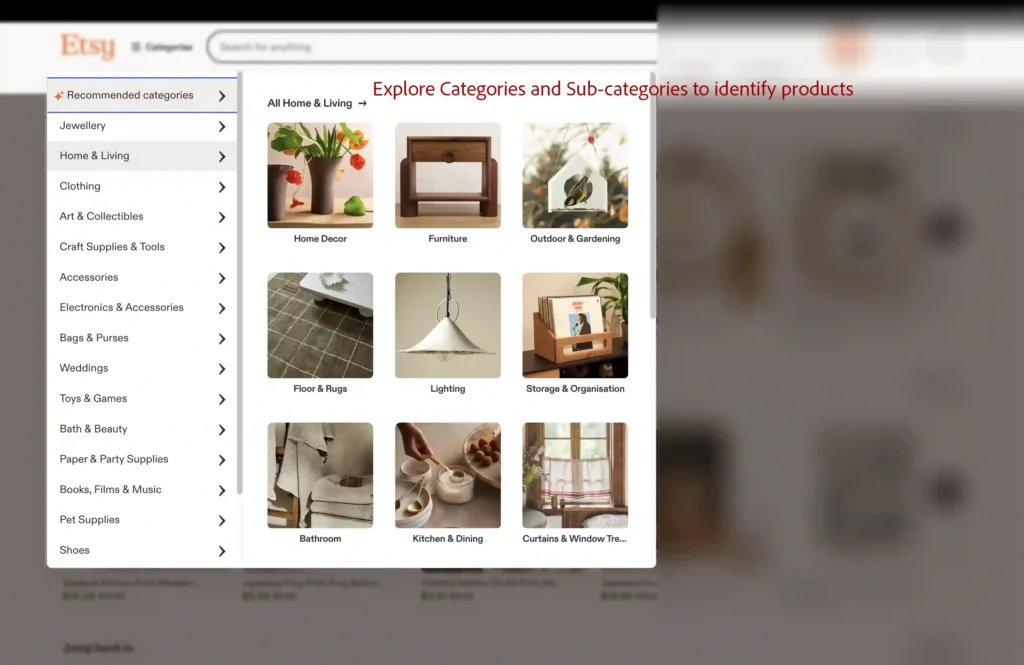
You can search a specific product category directly in the search bar or explore the categories section on Etsy’s homepage. Explore different subcategories to know what products are popular in each category. As shown in the screenshot below, when you click ‘Categories,’ you will see various subcategories in the drop-down menu. You can explore them to identify products that sell.
3. Leverage Research Tools to Identify High-Potential Products
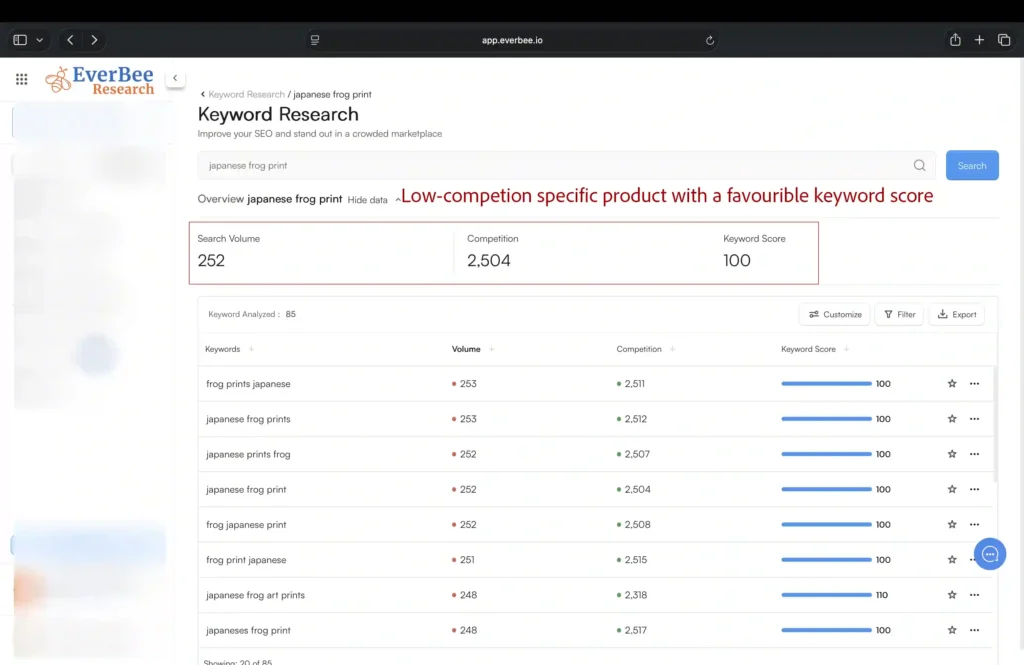
If you enter a highly competitive product category, such as wall art, jewelry, or t-shirts, you can only get sales through a specific product with low competition based on long search phrases. It is crucial to use the Etsy research tool, EverBee, to identify these specific products. You can scan its keyword list to identify low-competition, specific products with high keyword scores.
Low Search Volume for a Specific Product Does Not Always Mean Low Sales
Specific products typically have a lower search volume than generic keywords, but that does not mean low sales. The more specific a search phrase is, the stronger the buying motive, thereby leading to higher sales. For instance, a buyer searching for ‘frog print’ may be browsing, whereas a buyer searching for ‘Japanese bathroom frog print’ has a high buying intent. As shown in the screenshot below, the search term ‘Japanese frog print’ has very low competition with around 2.5k listings and sufficient search volume. When you search these listings on Etsy, you will find that many are selling in good numbers, indicated by the ‘In demand’ label. You need to manually check demand on Etsy to assess the actual sales potential.
However, a specific product with low competition and sufficient search volume does not necessarily make an ideal product. You need to analyze it further to ensure that it is worth the effort.
Mistake #3
Finding a specific product with low competition and starting to sell on Etsy
This is the mistake that I also made. While I picked a product with low competition and high search volume to sell on Etsy, there were competing listings with extensive customization options that I did not offer. Without a doubt, this product failed.
4. Check for ‘Bestsellers’ and ‘Popular Now’ tags
Once you have identified a keyword with a decent search volume and low competition, you should search it on Etsy to check how many listings have ‘Bestsellers’ and ‘Popular Now’ tags on the first 10 pages.
More ‘Bestsellers’ and ‘Popular Now’ —> Demand is evenly distributed —> Buyers are flexible —> Better opportunity to get sales
One or two ‘Bestsellers’ —> Demand is concentrated —> Buyers are specific —> Less opportunity to get sales
Therefore, if you see a few bestsellers despite low competition, you should investigate why only a few sellers are making sales while the rest of the listings remain silent. You should analyze whether there is anything these bestsellers offer that is difficult to achieve.
5. Check the Demand on the Listing Page
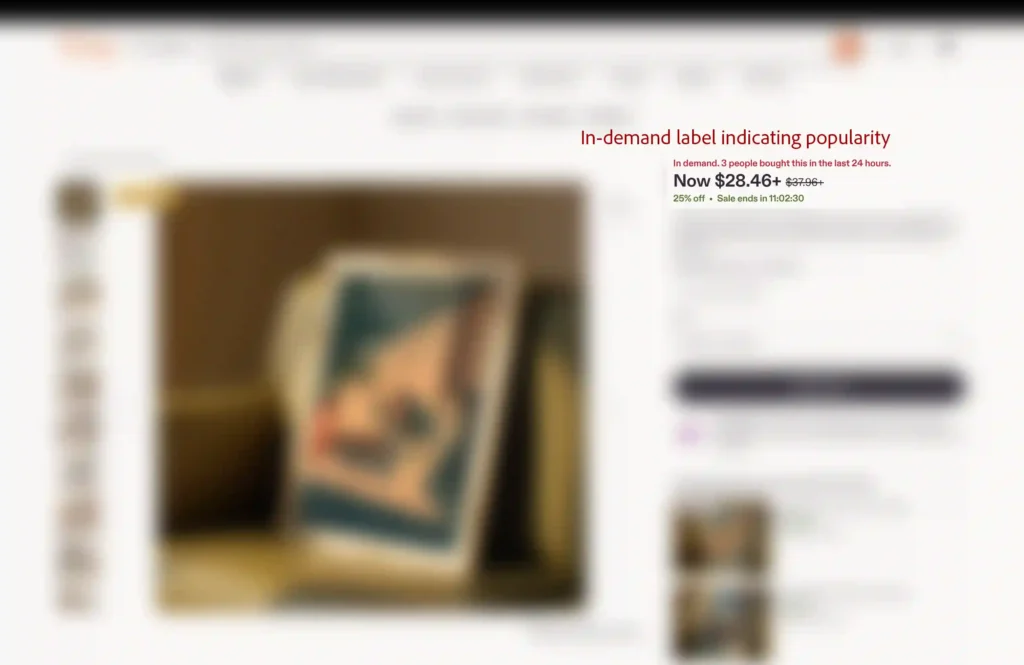
Etsy labels listings that are currently in demand as ‘In demand. X people bought this in the last 24 hours.’ This is a positive signal indicating that the product is currently popular.
Real Advice: Don’t Rely on the Cart Count Indicator
If you see a cart count badge ‘In 20+ baskets’ and conclude that the product is in demand, you might be mistaken. While this badge shows buyer interest in the listing, that interest may be from a long time ago. In fact, it can be possible that a product is added to the cart but never sold even once. I know because it happened with one of my listings. You need to check the reviews section to see if there are any review comments and when they were posted. This is covered in the next point.
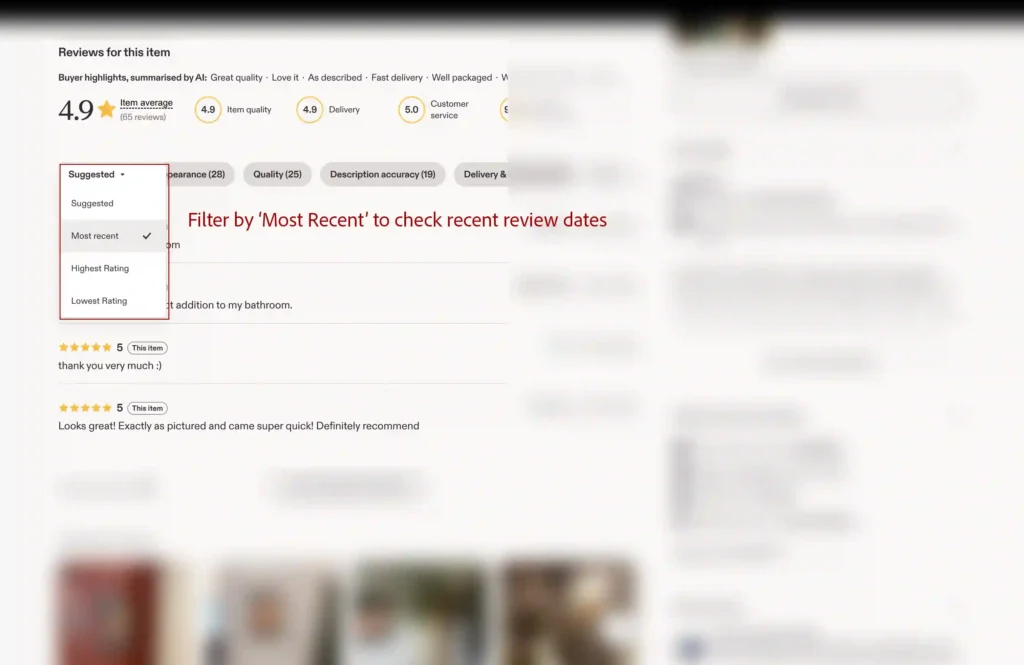
5. Check Recent Review Dates
Last but not least, you need to check the most recent review dates to ensure the product is currently in demand. You should also check gaps between review dates to see whether the listing is making consistent sales. If a month has elapsed since the last review date, it indicates either that the product has seasonal demand or is losing popularity. You should investigate the reasons behind this gap before you pick a product for your Etsy shop.
6. Analyze Differentiation Opportunities
After you have completed all the checks, you should determine if there are any opportunities to differentiate from ‘Bestseller’ and ‘Popular Now’ products. If you offer similar products, it will be difficult to make any sales. A customer choosing between two similar products will always pick the one with reviews and sales history. Basically, you should think about the following:
- Can I offer a better design, material, or texture?
- Can I make better listing photos than competitors?
- Can I offer similar or even more customization options than competitors?
- Are competing sellers big with marketing budgets or small?
After ensuring that differentiation opportunities exist, you should only then pick a product to sell.